Turning Rejection Into Acceptance: A Scholar's Framework for Interpreting Peer Review and Revising With Purpose
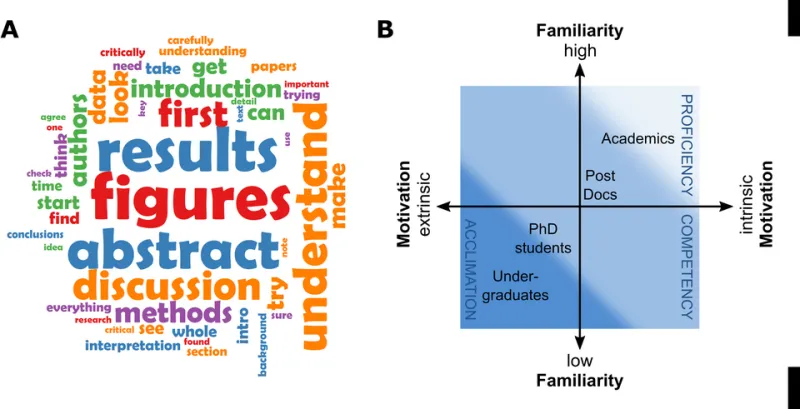
Photo: Authors of the study: Katharine E. Hubbard, Sonja D. Dunbar, CC BY 4.0, via Wikimedia Commons
Every active researcher in the United States has received a rejection letter. Many have received dozens. The sting is real, and it does not fully diminish with experience. What does change, for researchers who approach the process deliberately, is the ability to extract genuine value from unfavorable decisions — to read what reviewers are actually communicating beneath the formal language, and to use that information to produce a stronger manuscript.
Peer review is among the most consequential and least formally taught aspects of academic publishing. Graduate programs invest heavily in research methods and disciplinary content, but rarely provide structured guidance on how to respond when a journal declines a submission. The result is that many talented researchers repeat the same submission errors, accumulate rejections they do not fully understand, and lose confidence that could otherwise be channeled into productive revision.
This guide offers a practical framework for moving through that process with greater clarity and purpose.
Understanding the Taxonomy of Journal Decisions
Not all rejections are equivalent, and distinguishing between types of unfavorable decisions is the essential first step in determining your next move.
Desk rejection occurs before peer review, typically within days of submission. An editor has determined that the manuscript falls outside the journal's scope, fails to meet basic formatting or methodological requirements, or does not reach the threshold of novelty the publication requires. Desk rejections are rarely a reflection of the research's underlying quality. They are most commonly a signal of journal fit — and they should be treated accordingly. Review the journal's aims and scope carefully, assess whether the feedback suggests any substantive weaknesses, and redirect the manuscript to a more appropriate venue promptly.
Rejection after peer review is more informative and, paradoxically, more valuable. Here, at least two independent experts in your field have engaged with your work in detail. Even when the verdict is unfavorable, the comments they provide represent a form of free, expert consultation that many researchers underutilize.
Rejection with invitation to resubmit — sometimes framed as "reject and resubmit" — occupies a middle ground. The journal is signaling that the work has merit but requires substantial revision before it can be reconsidered. This is not a rejection in the conventional sense; it is a conditional invitation. Treat it accordingly.
Major and minor revisions are, strictly speaking, not rejections at all. A request for major revisions indicates that reviewers see publishable potential but require significant changes to methodology, framing, or evidence. Minor revisions are largely editorial. Both represent positive outcomes that researchers should receive with measured optimism.
Reading Reviewer Comments With Analytical Precision
The language of peer review can be opaque, contradictory, and occasionally frustrating. Developing the ability to read it analytically rather than emotionally is a skill that pays dividends across an entire career.
Begin by reading all reviewer comments once, without annotating or responding. Allow yourself to process any initial emotional reaction before returning to the text with a critical eye. Subsequent readings should be systematic.
Separate observations from recommendations. Reviewers often embed implicit recommendations within descriptive observations. A comment noting that "the theoretical framework is underdeveloped" is not merely a criticism — it is a directive to expand and strengthen your conceptual grounding. Translating observations into actionable tasks clarifies the revision pathway.
Identify consensus concerns. When two or more reviewers independently raise the same issue, that concern carries particular weight. Editors pay close attention to points of consensus when making final decisions, and your revision response should address these shared critiques with particular thoroughness.
Distinguish substantive critique from preference. Reviewers are human, and peer review comments sometimes reflect disciplinary preferences, methodological biases, or stylistic inclinations rather than genuine weaknesses in the manuscript. Learning to distinguish between "this is a real problem that undermines the contribution" and "this reviewer would have approached the question differently" allows you to prioritize your revisions effectively. You are not obligated to agree with every comment — you are obligated to engage with every comment thoughtfully.
Flag contradictory feedback. It is not uncommon for two reviewers to offer conflicting recommendations. When this occurs, you must make a reasoned judgment about which direction better serves the manuscript's integrity, and explain that reasoning transparently in your revision letter.
Identifying Patterns Across Multiple Rejections
If a manuscript has been rejected by more than two journals, the feedback warrants a higher level of pattern analysis. Gather all reviewer comments received to date and look for recurring themes.
Common patterns include persistent concerns about the scope of the literature review, questions about methodological rigor, requests for stronger discussion of limitations, or suggestions that the contribution's novelty is insufficiently articulated. Each of these patterns points toward a specific revision strategy that, once addressed, can significantly improve the manuscript's prospects across subsequent submissions.
This analysis also helps researchers distinguish between manuscripts that need targeted revision and those that may benefit from a more fundamental reconceptualization. Sometimes the most productive response to repeated rejection is not another round of incremental edits, but a genuine reassessment of the argument's framing and the audience it is best suited to reach.
Crafting a Revision Letter That Persuades
For manuscripts under revision — whether following a major revision request or a reject-and-resubmit invitation — the revision letter is as important as the revised manuscript itself. Editors and reviewers read these letters carefully, and a well-constructed response can shift a borderline decision in your favor.
Structure your revision letter as follows. Open with a brief, professional expression of gratitude for the reviewers' time and engagement. Then address each reviewer's comments sequentially, using numbered or lettered formatting that mirrors the original feedback. For each comment, provide three elements: an acknowledgment of the concern, a description of the specific change made in response, and, where relevant, a brief explanation of the reasoning behind your approach.
When you disagree with a reviewer's recommendation, say so — respectfully and with evidence. Editors respect scholarly confidence grounded in reasoned argument. What they do not respect is dismissiveness or defensiveness. A response that says "we respectfully maintain our original approach for the following reasons" and then provides a clear, evidence-based rationale is far more persuasive than either blind compliance or brusque refusal.
Close the letter with a clear statement that all changes have been made in the spirit of strengthening the manuscript's contribution to the field.
The Long View on Rejection
Some of the most widely cited papers in American scholarship were rejected by multiple journals before finding their home. Rejection is not a verdict on your capacity as a researcher — it is a data point in a process that rewards persistence, precision, and the willingness to engage critically with your own work.
At Journal Publication Pro, we believe that every stage of the publication process, including the difficult ones, is an opportunity to sharpen the quality of scholarly work. Understanding peer review not as an obstacle but as a mechanism of refinement is one of the most important professional perspectives a researcher can develop. The manuscript that reaches print after rigorous review and thoughtful revision is almost always better for the journey.