Beyond the H-Index: How Research Impact Metrics Are Reshaping Academic Careers and Funding in 2024

Photo: Ministry of Education/PIB Ahmedabad, GODL-India, via Wikimedia Commons
For decades, a researcher's reputation was largely shaped by the prestige of the journals in which they published. Today, that calculus has grown considerably more complex. Funding agencies, department chairs, and tenure committees across the United States are increasingly reaching for quantitative tools — citation counts, h-indexes, journal impact factors, and a newer generation of altmetrics — to evaluate scholarly productivity. The result is an environment where understanding the metrics that measure your work has become nearly as important as the work itself.
This shift is not without controversy. Critics argue that reducing decades of intellectual contribution to a single number distorts the true value of scholarship. Yet the practical reality for most American academics is that these figures carry real consequences. Grant reviewers at the National Institutes of Health (NIH) and the National Science Foundation (NSF) routinely examine citation profiles. Promotion committees request h-index documentation. And journal editors increasingly consider an author's publication history when assessing submissions. Navigating this landscape with both strategic clarity and scholarly integrity is the challenge facing researchers in 2024.
Understanding the Core Metrics
Before developing any strategy, researchers benefit from a clear-eyed understanding of what each major metric actually measures — and what it does not.
Citation Count is the most straightforward measure: the total number of times a published work has been referenced by other scholarly publications. High citation counts signal that peers find a work relevant and worth engaging with. However, citation counts are highly field-dependent. A respected paper in pure mathematics may accumulate far fewer citations than an equivalent contribution in biomedical research, simply because the publishing communities differ in size.
The h-Index, introduced by physicist Jorge Hirsch in 2005, attempts to capture both productivity and impact in a single figure. A researcher with an h-index of 20 has published at least 20 papers that have each been cited at least 20 times. The elegance of the metric lies in its resistance to inflation by a single highly-cited paper. Its weakness is that it accumulates over time, systematically disadvantaging early-career researchers.
Journal Impact Factor (JIF) measures the average number of citations received per article published in a journal over a two-year period. While widely used, the JIF has drawn sustained criticism for conflating journal-level performance with individual article quality. Publishing in a high-impact journal does not guarantee that any particular paper will be widely cited.
Altmetrics represent a newer and rapidly evolving category. Tools such as Altmetric and PlumX track online attention — social media mentions, news coverage, policy document citations, and public repository downloads. For researchers whose work has applied or public policy dimensions, strong altmetric scores can demonstrate societal reach beyond the academic community, an increasingly valued quality among federal funding agencies.
What Institutions Actually Prioritize
Not all metrics carry equal weight in every context. Understanding your institution's specific priorities is essential before investing significant effort in any one area.
At research-intensive universities, the h-index and citation counts in peer-reviewed literature tend to dominate tenure and promotion reviews. Committees often benchmark candidates against field-specific norms, making it critical that researchers understand how their discipline compares to broader averages. Tools such as Google Scholar, Scopus, and Web of Science each generate somewhat different citation counts due to differences in database coverage — knowing which platform your institution relies upon is a practical first step.
For researchers seeking federal funding, demonstrated public impact is gaining traction. The NIH's emphasis on translational research has elevated the importance of showing that scholarly work reaches practitioners, policymakers, and the public. In this context, strong altmetric scores and media coverage can meaningfully supplement traditional citation data in grant narratives.
At teaching-focused institutions, publication volume and citation metrics may matter less than evidence of pedagogical contribution or community engagement — though this varies widely by department and institutional mission.
Ethical Strategies for Maximizing Research Visibility
The good news for researchers is that improving impact metrics and maintaining rigorous scholarly integrity are not competing goals. The most durable citation records are built through genuine scholarly contribution, strategic dissemination, and professional community engagement.
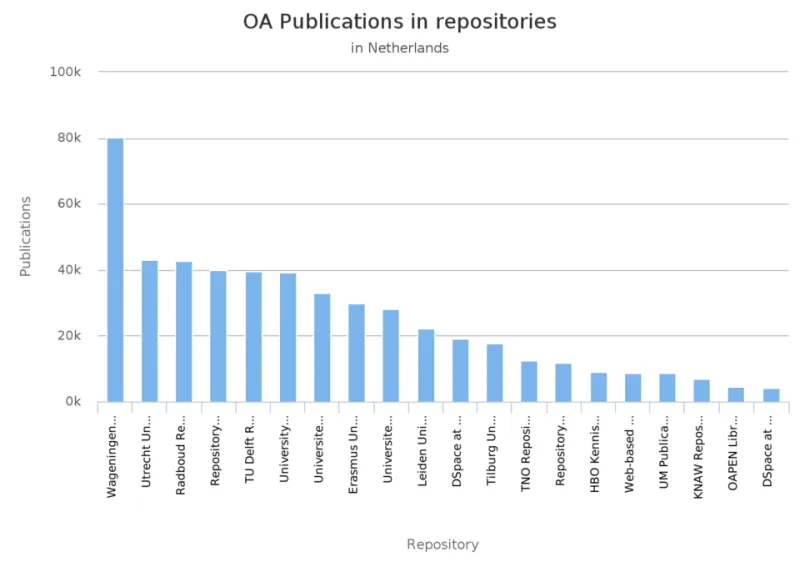
Prioritize open access dissemination. Research consistently demonstrates that open access articles receive more citations than those locked behind paywalls. Depositing accepted manuscripts in institutional repositories, discipline-specific preprint servers such as arXiv or SSRN, or publishing in legitimate open access journals expands the potential readership of your work significantly. Many federal funding mandates, including updated NIH public access policies, now require open access dissemination anyway.
Optimize your scholarly profiles. Maintaining complete and accurate profiles on Google Scholar, ORCID, ResearchGate, and Academia.edu ensures that citations are attributed correctly and that your work surfaces in relevant searches. Claiming your ORCID identifier and linking it consistently across submissions is particularly valuable, as it distinguishes your record from researchers with similar names.
Write for discoverability. Titles and abstracts that use precise, searchable terminology improve the likelihood that your work appears in literature searches conducted by other researchers. Keyword selection is not merely a submission formality — it is a discoverability decision.
Engage with your scholarly community. Presenting at major conferences, participating in collaborative research networks, and responding thoughtfully to work in your field all create organic pathways for citation. Researchers who are active, visible, and collegial tend to be cited more frequently, not because of self-promotion, but because their work is encountered more often.
Avoid citation manipulation. It bears explicit mention that practices such as coercive citation, citation rings, and self-citation inflation are increasingly detectable and carry serious professional consequences. Publishers and funding agencies have grown more sophisticated in identifying anomalous citation patterns. Building an impact record through legitimate means is both the ethical and the professionally prudent path.
The Bigger Picture
Metrics are tools, not verdicts. The most accomplished scholars use impact data as one form of feedback among many — a signal worth attending to, but not a substitute for the deeper question of whether their research is genuinely advancing knowledge in their field.
For researchers at every career stage, the goal is not to game any particular measurement system, but to produce rigorous, well-disseminated scholarship that earns its visibility through merit. In 2024, that means understanding the landscape well enough to navigate it strategically — and trusting that precision in publishing, combined with authentic intellectual contribution, remains the most reliable foundation for a lasting scholarly reputation.
At Journal Publication Pro, we work with researchers and institutions to ensure that the publication process itself supports both integrity and visibility. Precision in how you publish is the first step toward impact that endures.