From Paywalls to Public Knowledge: How American Academia Is Rewriting the Rules of Scholarly Publishing
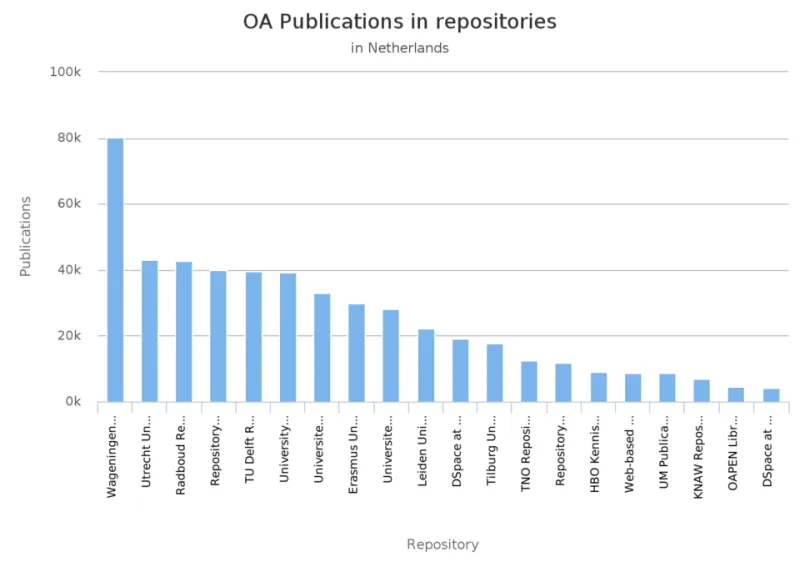
Photo: OpenAIRE (Open Access Infrastructure for Research in Europe), CC BY 4.0, via Wikimedia Commons
For decades, the architecture of academic publishing in the United States operated on a deceptively simple premise: researchers produced scholarship, journals published it, and universities paid handsomely to access it. That arrangement, long accepted as an unavoidable cost of doing science and scholarship, is now under extraordinary pressure. Across campuses from MIT to the University of California system, a growing coalition of administrators, faculty advocates, and funding agencies is dismantling the subscription model — and the implications for every working researcher are significant.
The Financial Reckoning Behind the Movement
The numbers that drove institutions toward open access were difficult to ignore. Major research universities routinely spent between $5 million and $15 million annually on journal subscription bundles — so-called "Big Deal" packages offered by publishers such as Elsevier, Springer Nature, and Wiley. These costs escalated at rates far exceeding inflation, consuming an ever-larger share of library budgets while simultaneously restricting access to the very research those institutions had helped produce.
The University of California system made international headlines in 2019 when it declined to renew its contract with Elsevier, citing unsustainable costs and the publisher's resistance to open access terms. That decision, which affected access to thousands of journals, signaled a turning point. It demonstrated that even the largest and most prestigious American research universities were prepared to accept short-term disruption in pursuit of a more equitable long-term publishing environment.
The financial calculus extends beyond subscription fees. When federal funding agencies such as the National Institutes of Health (NIH) and the National Science Foundation (NSF) mandate open access dissemination of publicly funded research, the cost-benefit equation shifts further. Institutions that have already invested in open access infrastructure and publishing agreements find compliance straightforward. Those still tethered to traditional models face an additional layer of administrative complexity.
Federal Mandates and the Policy Momentum
The policy environment in the United States has grown increasingly favorable to open access publishing, creating institutional incentives that extend well beyond individual preference. The White House Office of Science and Technology Policy (OSTP) issued guidance in 2022 requiring that all federally funded research be made freely available to the public without embargo periods — a directive that effectively accelerated timelines across virtually every discipline.
For researchers whose work is supported by federal grants, compliance with these mandates is not optional. Depositing accepted manuscripts in repositories such as PubMed Central or institutional repositories has become a standard expectation. Understanding how open access agreements interact with grant requirements is now a core competency for any researcher seeking federal funding.
State-level policies are also emerging. Several state legislatures have introduced or passed measures requiring open access for research conducted at public universities, further reinforcing the national momentum toward unrestricted scholarly communication.
What This Means for Early-Career Researchers
For doctoral students, postdoctoral fellows, and assistant professors navigating their first independent publishing decisions, the open access landscape presents both opportunity and complexity. On one hand, open access publication dramatically expands the potential audience for scholarly work. Research published without a paywall consistently demonstrates higher citation rates and broader societal engagement — outcomes that matter enormously for building an academic reputation.
On the other hand, the proliferation of open access venues has created genuine confusion about quality and prestige. Not all open access journals carry the same weight in tenure and promotion deliberations. The Directory of Open Access Journals (DOAJ) and similar verification resources provide a starting point for evaluating legitimacy, but early-career researchers must also consider how their specific disciplines and hiring committees perceive particular publication venues.
Article Processing Charges (APCs) present another practical challenge. Many reputable open access journals charge authors fees ranging from several hundred to several thousand dollars to cover publication costs. For researchers without institutional support or grant funding to cover these charges, the financial barrier can be substantial. Fortunately, many institutions have established APC funds, and an increasing number of publishers offer fee waivers for researchers at lower-resourced institutions.
Emerging Platforms Reshaping Scholarly Communication
Beyond traditional journal publishing, a new generation of platforms is redefining how scholarly work circulates. Preprint servers such as arXiv, SSRN, bioRxiv, and medRxiv allow researchers to share findings immediately, before formal peer review, enabling rapid dissemination and community feedback. In fields such as physics and economics, preprint culture has been established for years. In biomedical research and the social sciences, adoption accelerated dramatically during the COVID-19 pandemic, when speed of communication was a public health imperative.
Diamond open access models, in which neither authors nor readers pay for publication, are gaining institutional support as well. Organizations such as the Invest in Open Infrastructure initiative are working to build and sustain scholarly communication infrastructure that is not dependent on commercial publishers. These models represent a fundamental reimagining of who controls and finances the dissemination of knowledge.
Institutional repositories — maintained by universities to collect, preserve, and provide open access to the scholarly output of their communities — have also matured considerably. Platforms such as DSpace and Fedora underpin repositories at hundreds of American universities, offering researchers a reliable venue for self-archiving accepted manuscripts in compliance with both publisher policies and funder mandates.
Navigating the Transition with Precision
For researchers seeking to make informed decisions in this evolving environment, several practical steps are worth considering. First, familiarize yourself with your institution's open access policy and any agreements your library has negotiated with major publishers. Many universities have secured so-called transformative agreements that allow affiliated researchers to publish open access at reduced or no cost in participating journals.
Second, consult resources such as the SHERPA/RoMEO database, which catalogs publisher policies on self-archiving, and the DOAJ for verifying the legitimacy of open access venues. Third, engage proactively with your institution's scholarly communications librarian — a resource that remains underutilized at many universities despite the considerable expertise these professionals offer.
Finally, recognize that publishing decisions carry long-term career implications. Selecting venues based solely on speed, cost, or convenience, without considering disciplinary reputation and indexing quality, can undermine the very visibility that open access is intended to provide.
The open access revolution is not a distant forecast — it is the present reality of American academic publishing. Researchers who understand its dynamics, engage with its infrastructure, and make deliberate decisions about where and how they publish will be far better positioned to achieve the reach, impact, and recognition their work deserves. At Journal Publication Pro, we are committed to providing the guidance and services that empower scholars to navigate this transformation with confidence and precision.