Extending Without Overlapping: The Unwritten Rules of Turning a Conference Paper Into a Journal Article
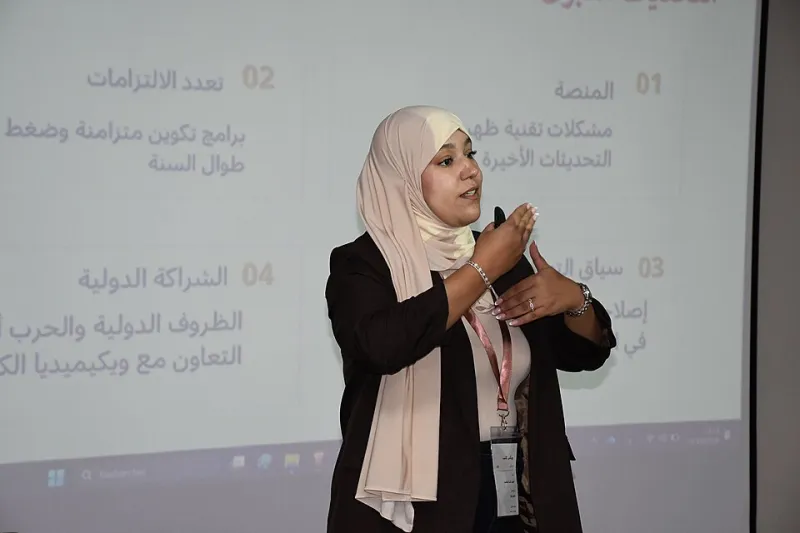
Photo: DERDAKI ILIAS, CC BY-SA 4.0, via Wikimedia Commons
Every year, thousands of scholars present conference papers with the quiet intention of expanding them into journal articles. Few do, and a meaningful share of those who try hit an unexpected obstacle: an editor or reviewer flagging the submission as too close to the published conference version. The pipeline from conference proceedings to peer-reviewed journal is legitimate, widely accepted, and governed by norms almost nobody explains to early-career researchers. Here is what those norms actually are.
The Threshold Question: How Much New Material Is Enough?
The most frequently cited benchmark — often attributed to guidance from engineering societies — holds that a journal version should contain roughly 50 percent new material relative to the conference paper. The figure is not a formal rule, and no editor measures it with software. What editors evaluate is whether the journal article constitutes a substantially complete contribution on its own.
In practice, that means the expansion should be substantive rather than cosmetic. Acceptable extensions include a deeper theoretical treatment, additional experiments or case studies, a more rigorous analysis of the same data, and a fuller engagement with the literature. What does not qualify: longer paragraphs, reorganized sections, and an expanded literature review bolted onto identical findings. Reviewers who know the conference version — and in many fields, they do — will notice immediately.
Cite Your Own Conference Version, Every Time
The single most important rule is also the most commonly violated. The journal article must cite the conference paper as prior work, typically in the introduction and wherever the earlier findings are built upon. This citation does three things simultaneously: it establishes provenance, it directs readers to the earlier contribution, and it demonstrates to the editor that the overlap is transparent rather than concealed.
Concealment is what converts a routine extension into an integrity problem. Duplicate publication policies exist to prevent the same findings from being counted twice in the scholarly record and in metrics. A transparently cited, substantially expanded journal version is standard practice. An unacknowledged near-duplicate is a reportable offense that can follow a scholar for years.
Check the Copyright You Signed
Before writing a single new paragraph, revisit the copyright or publication agreement signed with the conference publisher. IEEE, ACM, and most major societies permit journal extensions, but their policies differ in the details — some require that the journal version cite the proceedings paper, others impose specific wording, and a few require notification. Most agreements also prohibit verbatim reuse of substantial text passages, meaning the journal article should be written fresh even where the underlying content overlaps.
A practical habit: draft the journal version from your outline and data rather than from the conference paper document. This naturally produces new prose and reduces text-similarity scores that some journals now run automatically.
Expansion Strategies by Discipline
The right expansion path varies considerably across fields.
- Computer science and engineering: Add new experimental conditions, additional datasets or benchmarks, ablation studies, and a complete related-work section that the page-limited conference format compressed. Systems papers often benefit from a full deployment or scalability evaluation.
- Social sciences: Extend the analysis with robustness checks, additional hypotheses, or a second study. Conference papers in these fields frequently present preliminary results; the journal version should present the completed research program.
- Life sciences: Expand the mechanistic investigation, add replication cohorts, and provide full methods that conference abstracts necessarily omit.
- Humanities: Develop the argument's theoretical stakes, engage a broader scholarly conversation, and address counterarguments that a twenty-minute talk could not accommodate.
A Pre-Submission Checklist
Before submitting, confirm each of the following:
- The conference paper is cited in the journal manuscript.
- The copyright agreement with the conference publisher permits extension.
- New material constitutes a substantial portion of the article — analysis, findings, or theory, not just prose.
- No substantial text is reused verbatim from the proceedings version.
- The submission letter discloses the relationship to the conference paper, briefly and plainly.
That last item deserves emphasis. Editors do not reject extensions; they reject surprises. A single sentence in the cover letter — noting that the article extends a conference paper published at a named venue, with roughly half the material new — signals professionalism and removes the issue from consideration entirely.
A Pipeline Worth Using Deliberately
Handled correctly, the conference-to-journal pathway is one of the most efficient publication strategies available, particularly for early-career scholars building a record. The conference paper tests the idea on a live audience and secures a timestamp; the journal article delivers the full contribution and the citation-worthy version of record. The scholars who stumble are rarely lazy — they simply never learned that the norms exist. Now you have.