After the Congratulations: A 90-Day Production Calendar From Acceptance to Publication
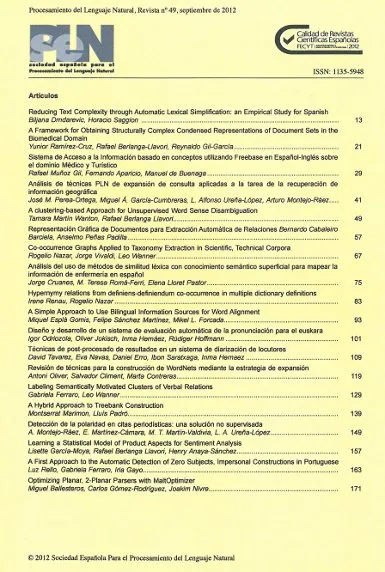
Photo: Asociacion para el Procesamiento del Lenguaje Natural, CC BY-SA 4.0, via Wikimedia Commons
The acceptance email arrives, the lab celebrates, and the manuscript quietly enters the least discussed phase of scholarly publishing. Production is unglamorous, deadline-driven, and largely invisible to coauthors — which is precisely why problems surface there. Copyediting queries go unanswered, proofs are reviewed on a phone in an airport, metadata is left uncorrected, and a paper that cleared rigorous peer review appears in print with an affiliation typo or a missing grant number.
The following calendar organizes the roughly ninety days between acceptance and publication into manageable blocks. Timelines vary by publisher and by article type, but the sequence is broadly consistent.
Days 1–7: Confirm, Sign, and Calendar
- Read the acceptance letter line by line for conditions. Some decisions are conditional on final figure files, permission documentation, or a shortened word count.
- Complete the publishing agreement. Decide between the subscription and open access routes, and confirm who is paying the article processing charge, if any.
- Submit the author questionnaire, conflict-of-interest forms, and funding disclosures. Corresponding authors should collect these from coauthors immediately rather than at the proof stage.
- Enter every deadline into a shared calendar. Proof windows are frequently 48 to 72 hours, and missing one delays publication by weeks.
Days 7–21: Copyediting and Author Queries
The copyeditor will return a manuscript with queries. Answer them directly in the tracked file rather than rewriting passages, and resist the urge to reopen settled editorial decisions.
- Verify reference accuracy, particularly for sources cited only in the discussion.
- Supply ethics approval numbers, trial registration identifiers, and consent statements exactly as recorded with the relevant body.
- Confirm author order, affiliations, and the corresponding author's email. Use a durable institutional address rather than a personal or student account.
- Prepare a CRediT contribution statement if the journal requires one, and make sure every listed author has reviewed it.
- Check that grant numbers match the funder's own records, including the correct award prefix.
Days 14–30: Metadata and Identifiers
Metadata determines whether the article is discoverable, correctly attributed, and eligible for indexing.
- Link an ORCID iD to the submission, and confirm that each coauthor has one attached to the correct record.
- Finalize the title and abstract with search behavior in mind; this is the last inexpensive moment to adjust them.
- Select keywords and subject classifications that match how readers in your subfield actually search.
- Record funders through the Crossref Funder Registry so the article is captured in funder reporting.
- Include a data and code availability statement with repository DOIs rather than a promise to share on request.
The Proof Window
The proof is not a revision opportunity. Publishers generally permit correction of typesetting errors only; substantive changes at this stage may be charged, delayed, or refused.
- Read every author name, degree, and affiliation against the original submission.
- Inspect figures for color accuracy, cropping, resolution, and legible axis labels.
- Check table alignment and footnotes, which are among the most frequently mangled elements.
- Confirm that all references carry correct DOIs and that in-text citations match the list.
- Verify equations, units, and supplementary file links.
- Ask a coauthor who did not draft the manuscript to read the proof cold. Fresh eyes catch what familiarity conceals.
Days 30–60: Rights, Embargoes, and Deposits
- Clarify the embargo date and time. Coordinate any institutional press release with the journal's communications office; a premature announcement can jeopardize coverage arrangements.
- Deposit the accepted manuscript in your institutional repository in accordance with the journal's green open access policy, and include the version-of-record DOI once assigned.
- Attend to federal public access obligations. Agencies' policies, in force since the end of 2025, generally require deposit of the accepted manuscript in a designated repository, often within twelve months of publication. Confirm the specific mechanism for your funder.
- Clear permissions for any third-party figures and retain the documentation.
Days 45–75: Positioning the Article
- Update your CV, ORCID record, and institutional profile with the forthcoming citation and DOI.
- Draft a plain-language summary for your department newsletter, center website, or funder's reporting channel.
- Schedule a seminar or conference presentation that coincides with publication.
- Post results to the trial registry if the study was a clinical trial.
- Prepare social and professional-network posts in advance, but hold them until the embargo lifts.
Days 75–90: Publication and Follow-Through
- Confirm the DOI resolves and the article page displays the correct author list, affiliations, and funding.
- Distribute the publisher's shareable link rather than circulating a PDF that may breach the license.
- Add the version of record to your repository record.
- Set a reminder to review citations and download counts at ninety days and again at one year.
- If an error appears after publication, follow the correction procedure. Silent edits to a posted file violate most publishers' policies and undermine the integrity of the record.
The Compact Version
Sign the agreement within a week. Answer queries within two. Finalize metadata before proofs. Read proofs on paper, with a coauthor. Deposit early, coordinate embargoes, and promote only after the embargo lifts. None of these steps is difficult; the challenge is that they arrive in a cluster while attention has already moved to the next project. A production calendar converts that cluster into a routine.